The Art of Personalization: Elevating Design with Migta Story
In an era where digital communication dominates our daily interactions, the human touch has become a rare and valuable commodity. We are inundated with standardized templates, algorithmic suggestions, and mass-produced content. Amidst this sea of uniformity, there is a growing desire for authenticity, warmth, and individuality in visual design. This is where typography plays a pivotal role, acting as the voice of a brand or the sentiment of a personal message. Among the myriad of typefaces available to designers and creators, Migta Story stands out as a distinctive solution for those seeking to inject a natural, handwritten elegance into their projects.
Migta Story is not merely a font; it is a stylistic choice that bridges the gap between professional polish and artisanal charm. Designed as a modern handwritten script, it captures the fluidity and imperfection of real handwriting while maintaining the legibility and structure required for contemporary design standards. Whether you are a graphic designer crafting a high-end wedding invitation suite, a small business owner looking to brand your packaging, or an educator creating engaging learning materials, understanding the nuances of this typeface can significantly enhance the emotional resonance of your work.
Defining the Aesthetic: What Makes Migta Story Unique?
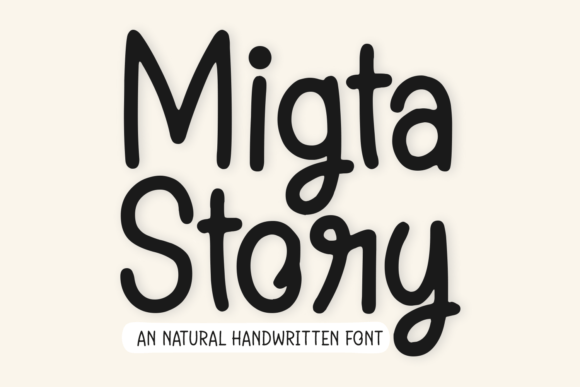
To appreciate the utility of Migta Story, one must first understand its aesthetic DNA. The term "modern handwritten script" suggests a specific balance—one that avoids the overly ornate flourishes of traditional calligraphy while steering clear of the rigid constraints of block letters. Migta Story achieves this by mimicking the natural flow of a pen moving across paper. The strokes vary in thickness, suggesting pressure and speed, which gives the text a dynamic, organic feel.
This versatility is perhaps its most defining characteristic. Unlike some scripts that are strictly decorative and difficult to read at smaller sizes, Migta Story is crafted with usability in mind. It retains the stylish curves and connecting lines typical of cursive writing but simplifies the ligatures enough to ensure clarity. This makes it suitable for a broader range of applications than many of its counterparts. It looks lovely on wedding invitations, thank you cards, quotes, greeting cards, logos, business cards, and every other design which needs a customized touch.
The font’s ability to convey emotion is subtle yet powerful. Handwritten fonts inherently suggest intimacy and personal effort. When a consumer sees a logo or a card designed with Migta Story, they subconsciously associate the brand or message with care, attention to detail, and a human element. In a market saturated with cold, corporate sans-serifs, this emotional connection can be a significant differentiator.
Practical Applications Across Industries
The adaptability of Migta Story allows it to be utilized across a wide spectrum of industries. Its application is not limited to traditional print media but extends into digital realms as well. Below are several key areas where this font excels.
Event Stationery and Celebrations
Weddings, birthdays, and anniversaries are moments defined by personal history and emotion. Stationery for these events sets the tone before the event even begins. Migta Story is particularly effective here because it complements the romantic and celebratory nature of such occasions. For wedding invitations, it can be used for the names of the couple or the titles of sections, adding a layer of sophistication without appearing archaic. Similarly, for thank you cards, the handwritten style reinforces the genuine gratitude being expressed, making the recipient feel truly valued rather than addressed by a form letter.
Branding and Identity for Small Businesses
For entrepreneurs, especially those in creative fields like baking, crafting, consulting, or boutique retail, establishing a brand identity that feels approachable yet professional is crucial. Migta Story serves as an excellent tool for logo design or wordmarks. Imagine a local bakery using Migta Story for its name on packaging—it immediately signals artisanal quality and homemade goodness. On business cards, it can be used for the contact person’s name, reinforcing the idea that there is a real person behind the business who is ready to listen and assist.
Social Media and Digital Content
In the fast-paced world of social media, visuals must stop the scroll. Quotes, motivational posts, and promotional graphics often rely on typography to convey their message quickly. Migta Story brings a sense of personality to Instagram stories, Pinterest pins, and Facebook posts. When used for quote graphics, the script format adds weight and emphasis to the words, encouraging users to pause and reflect. Educators and coaches can use it to create engaging slide decks or digital worksheets that feel less like lectures and more like personal notes.
Strategic Considerations for Implementation
While Migta Story offers numerous advantages, successful implementation requires a strategic approach. Typography is not just about picking a pretty font; it is about hierarchy, contrast, and readability. Here are some best practices to keep in mind when incorporating this typeface into your designs.
- Pairing with Complementary Fonts: To prevent visual fatigue, pair Migta Story with a clean, simple sans-serif or serif font for body text. The contrast between the flowing script and a structured geometric font creates a balanced composition. For example, use Migta Story for headlines and the complementary font for detailed descriptions.
- Whitespace is Key: Handwritten fonts often have unique ascenders and descenders that can take up vertical space. Ensure ample whitespace around the text to allow the characters to breathe. Crowded text can make a script font look messy and reduce legibility.
- Contextual Appropriateness: While versatile, Migta Story may not be suitable for technical documents, legal contracts, or data-heavy reports. Reserve its use for contexts where tone and personality are prioritized over strict informational density.
- Color and Texture: The effectiveness of a handwritten font can be enhanced by considering color psychology and background textures. Soft pastels, earth tones, or textured paper backgrounds can amplify the natural, organic feel of Migta Story.
The Psychological Impact of Handwritten Typography
Understanding why Migta Story works requires a brief dive into consumer psychology. Research in marketing and design suggests that handwritten elements trigger a response related to trust and authenticity. When people see handwriting, they perceive the creator as more authentic and trustworthy compared to typed text. This is rooted in the fact that handwriting is a slow, deliberate act that requires time and effort.
In the context of branding, this translates to perceived value. A product label featuring Migta Story may be perceived as higher quality or more exclusive than one with standard typography. For educators, using a script font in course materials can help build a rapport with students, making the learning environment feel more supportive and personalized. For hobbyists and artists, it validates the handmade nature of their creations, aligning the visual presentation with the physical effort involved in the craft.
Workflow Integration for Creators
Integrating Migta Story into your design workflow is straightforward, thanks to its availability in various formats (such as OTF, TTF, WOFF) compatible with major design software like Adobe Photoshop, Illustrator, Canva, and Microsoft Office. However, efficiency is key for professionals managing multiple projects.
- Asset Organization: Keep a dedicated folder for your preferred script fonts. Include variations if available, and maintain a style guide that outlines how Migta Story should be used in terms of size, color, and pairing.
- Template Creation: Create reusable templates for common tasks, such as social media quotes or email signatures. Pre-load Migta Story into these templates to save time and ensure consistency across all communications.
- Testing Legibility: Always test your designs in black and white and at small sizes. Sometimes, the intricate details of a script font can get lost in low-resolution prints or on mobile screens. Adjust kerning and tracking as necessary to optimize readability.
Comparing Migta Story to Other Script Fonts
The market is flooded with script fonts, so what sets Migta Story apart? Many script fonts fall into two extremes: those that are too formal and stiff, resembling old-fashioned copperplate engraving, and those that are too casual, resembling quick scribbles. Migta Story occupies a sweet spot in the middle. It is modern enough to fit seamlessly into contemporary minimalist designs yet classic enough to evoke tradition.
Compared to ultra-decorative scripts, Migta Story offers better scalability. It remains legible even when resized for large banners or small tags. Compared to basic cursive fonts, it offers more character and flair, providing a distinct visual identity that helps brands stand out. This balance of form and function is what makes it a preferred choice for designers who need reliability without sacrificing style.
Future Trends in Personalized Design
As we look toward the future of design, the trend toward personalization is only intensifying. Consumers are increasingly rejecting generic, one-size-fits-all solutions in favor of experiences that feel tailored to them. Typography is at the forefront of this shift. The demand for fonts that mimic human expression, such as Migta Story, will likely grow as brands seek to humanize their digital presence.
We may also see an increase in hybrid designs that combine script fonts with interactive digital elements. Imagine a website where hovering over a headline in Migta Story reveals a subtle animation that mimics the stroke of a pen. This integration of traditional aesthetics with modern technology opens up new possibilities for engagement and storytelling.
Conclusion
Migta Story represents more than just a typographic option; it is a tool for emotional connection. By leveraging its natural, stylish appearance, designers and creators can elevate their projects from ordinary to extraordinary. Whether used for a heartfelt thank you note, a sophisticated business logo, or an engaging educational resource, Migta Story adds a layer of customization and care that resonates with audiences. In a world that often feels impersonal, choosing the right font is a small step that can make a big difference in how your message is received and remembered.
As you embark on your next design project, consider the story you want to tell. If that story involves warmth, creativity, and personal touch, Migta Story is a compelling companion. It invites you to break away from the monotony of standard typefaces and embrace the beauty of the handwritten word. By doing so, you not only enhance the visual appeal of your work but also deepen the connection with your audience, fostering a sense of trust and authenticity that is invaluable in today’s competitive landscape.